 TravelHub
Itinerary · Europe by train
Alpine Europe by train in five days: Munich, Zurich, Lucerne, Lake Como, Milan
Beer gardens to mountain railways to Italian lakes: a five-day journey through Germany, Switzerland and Italy, crossing the Alps through the longest railway tunnel on Earth and arriving in time for an aperitivo.
Somewhere south of Lucerne, the train slips into a mountain in Switzerland and, about twenty minutes later, slides out into a different world. The houses turn ochre and terracotta, palm trees appear beside the lake, and the station announcements switch to Italian. Few journeys anywhere change so much, so quickly, and so comfortably. That's the magic of crossing the Alps by train.
This route is the companion to our north-western Europe itinerary, and it's a little more dramatic. You'll start among the beer halls and palaces of Munich, ride along the shores of Lake Constance to Zurich, climb a mountain by cogwheel railway near Lucerne, tunnel under the Gotthard to Italian-speaking Switzerland, and finish with Lake Como and Milan. Five days, three countries, and some of the most beautiful railway lines in the world.
Getting there: London to Munich in a day
You can reach Munich from London entirely by train: take an early Eurostar to Paris, then the direct high-speed train from Paris Gare de l'Est to Munich, which takes around five hours forty minutes. You'll be in Bavaria by evening, having crossed France and southern Germany from a comfortable seat. Short of time? Fly in and save the trains for the good bits.
Day 1: Munich, the Bavarian welcome
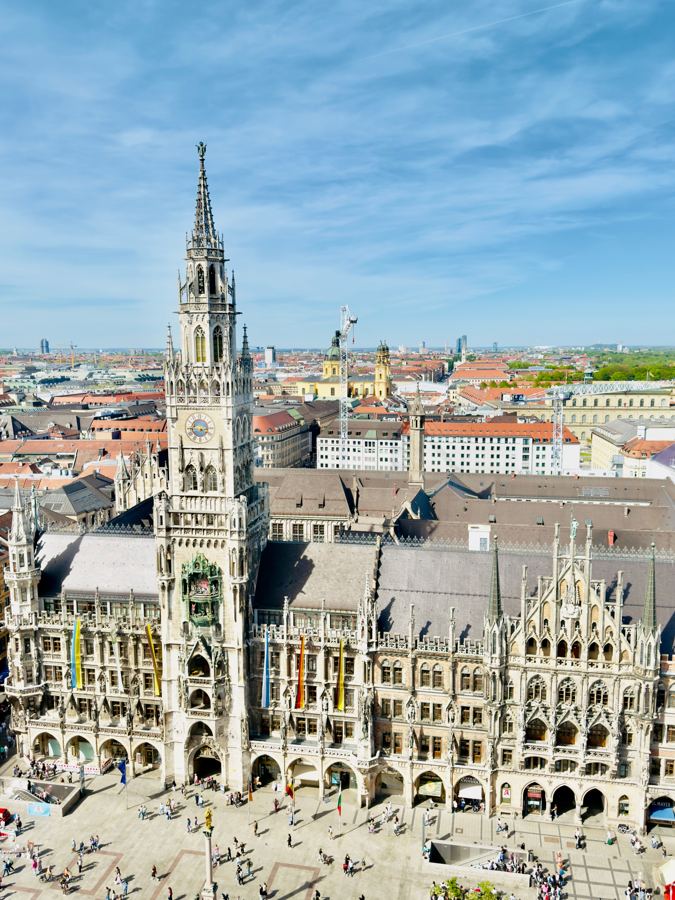
Munich does tradition with real joy. Start at Marienplatz, where the figures of the Glockenspiel on the neo-Gothic town hall dance at 11 a.m. and noon (and at 5 p.m. in summer), then wander through the Viktualienmarkt, the city's open-air food market, for a pretzel the size of your head and a plate of white sausage, traditionally eaten before noon.
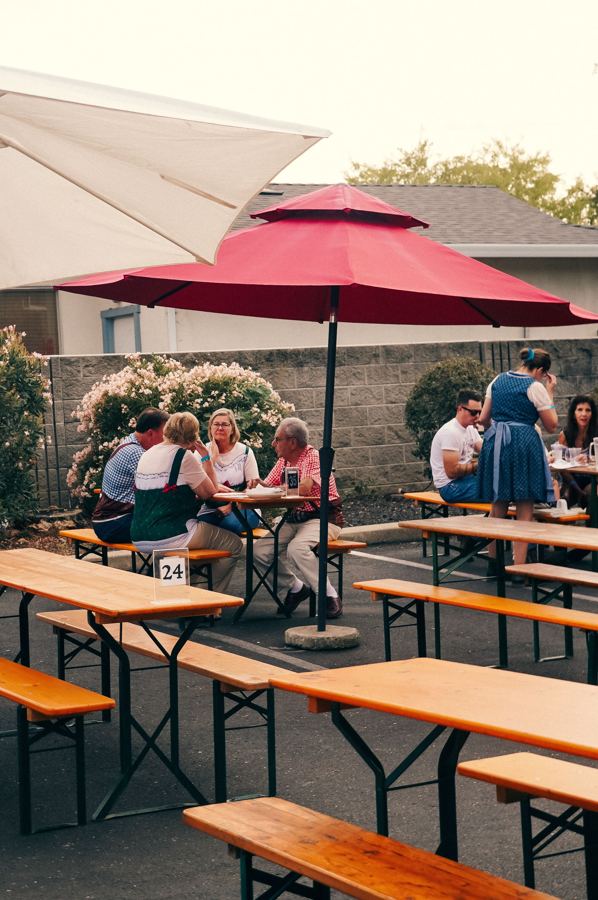
In the afternoon, head for the English Garden, one of the largest city parks in the world. At its southern edge, surfers ride a standing wave on the Eisbach river all year round, even in winter. Then do what Munich does best: find a beer garden under the chestnut trees. At the Chinese Tower in the English Garden, or at a traditional spot like the Augustiner-Keller, long wooden tables, a litre of Helles and a roast chicken make the perfect first evening.
Day 2: Munich to Zurich along Lake Constance
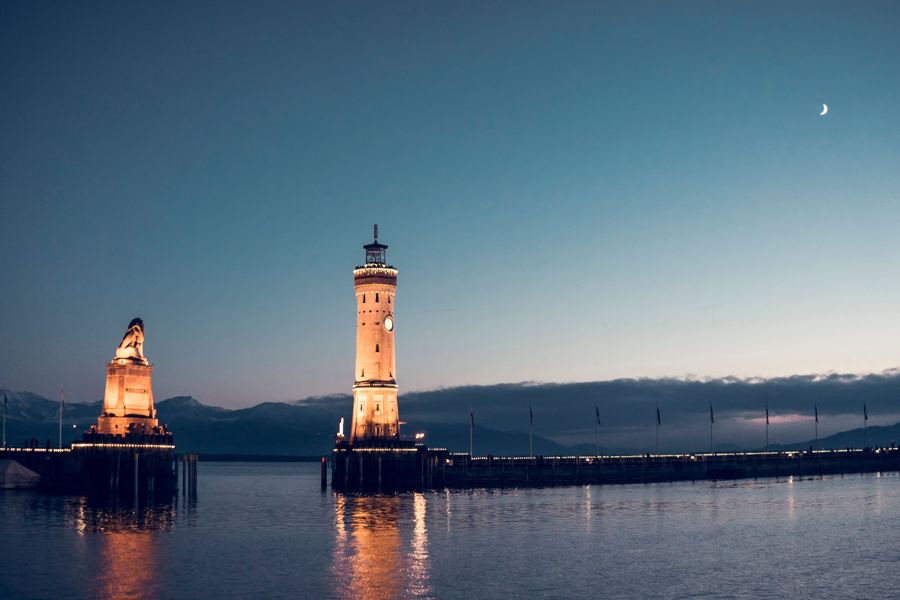
The direct EuroCity to Zurich takes about three and a half hours, and it's a lovely ride. Watch for the rolling green hills of the Allgäu, then the shimmering expanse of Lake Constance, where Germany, Austria and Switzerland meet, as the line skirts the island town of Lindau, its harbour guarded by a stone lion.
Arrive in Zurich by early afternoon. Walk from the station down the elegant Bahnhofstrasse to the lake, then cross into the old town. Climb to the Lindenhof, a leafy terrace with views over the rooftops and river, and step inside the Fraumünster church to see its five stained-glass windows by Marc Chagall. On a summer evening, do as locals do and swim in the lake or the Limmat river from one of the city's wooden bathing pavilions. Then try a cheese fondue in the old town; it's never too warm for fondue in Switzerland.
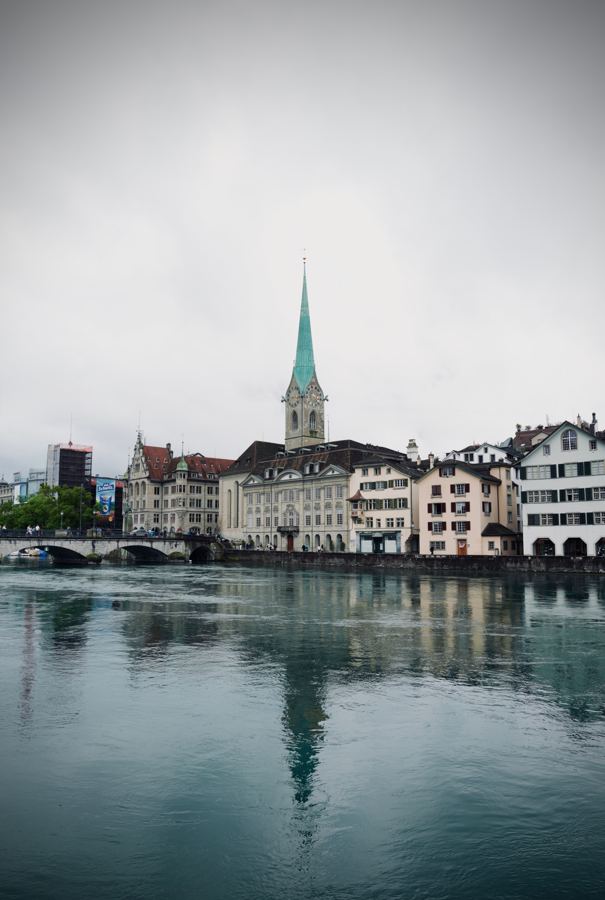

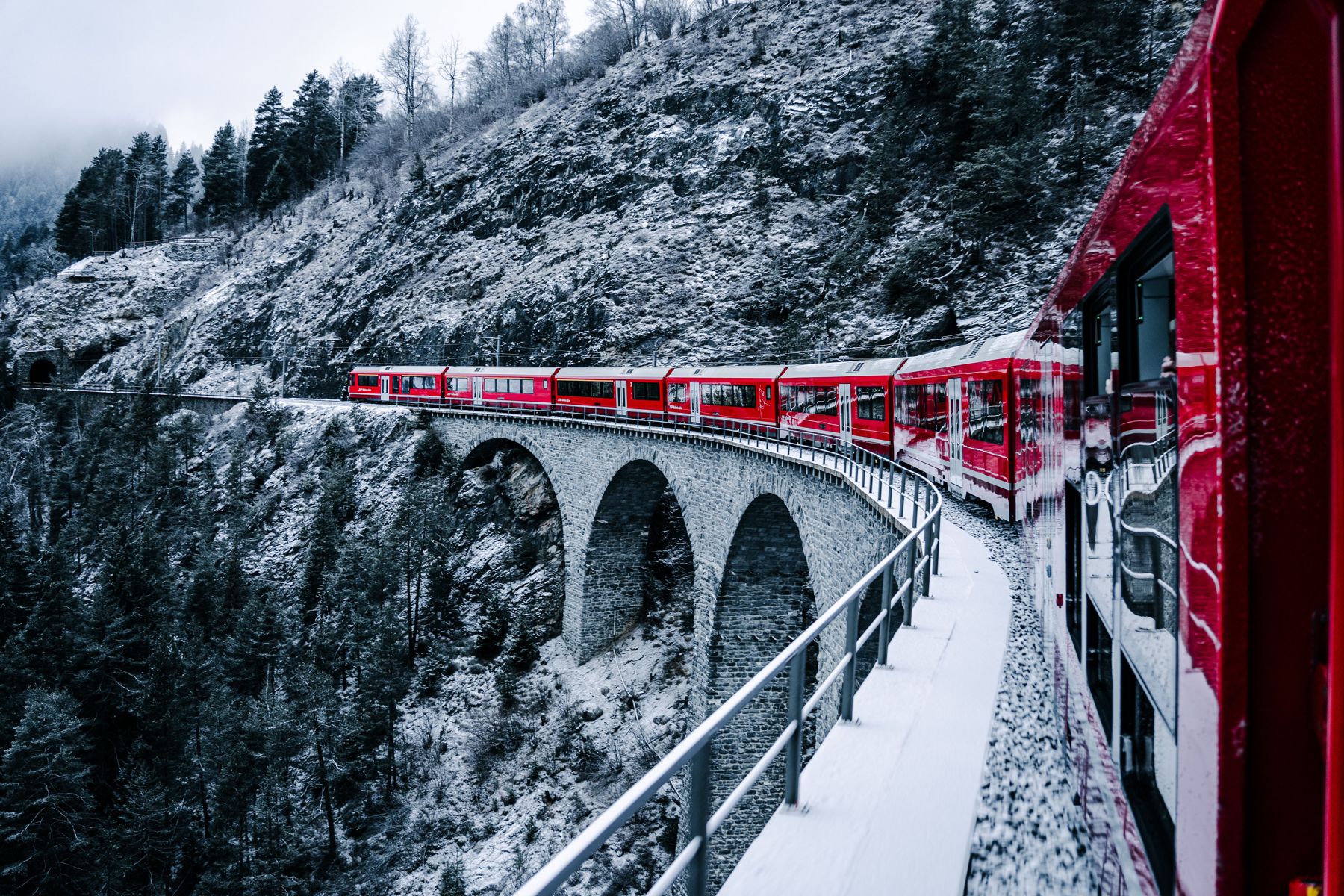
In Switzerland, the trains run so smoothly that the mountains seem to glide past the window.
Day 3: Lucerne and a mountain by cogwheel railway
It's only about forty-five minutes to Lucerne, a postcard of a town on a lake ringed by mountains. Walk across the Chapel Bridge, the covered wooden bridge from the 14th century that is the city's symbol, its roof lined with old painted panels, and visit the Lion Monument, a dying lion carved into the rock in memory of Swiss guards killed in Paris in 1792. Mark Twain called it the most mournful and moving piece of stone in the world.
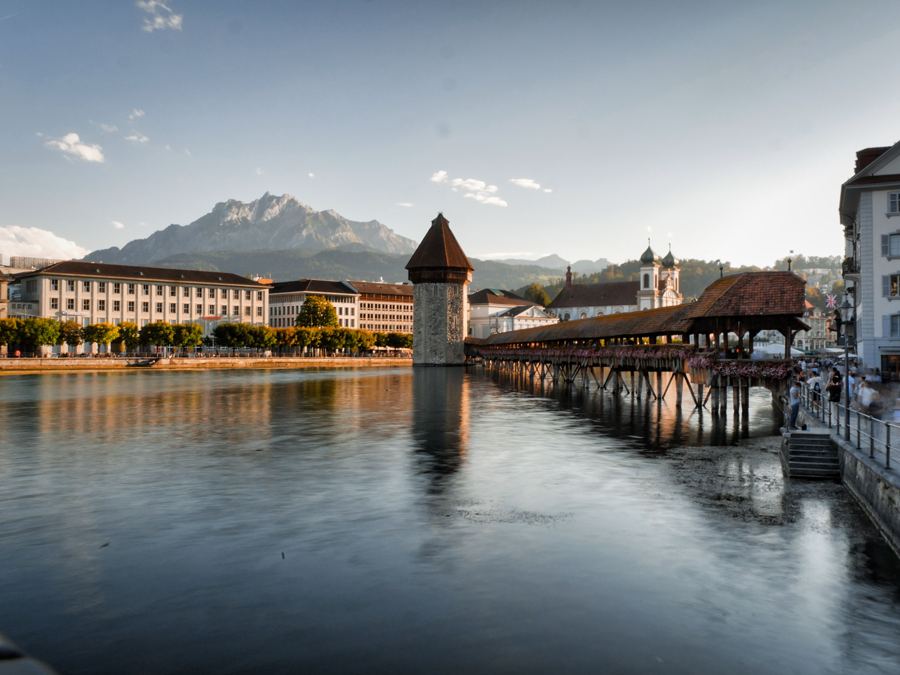
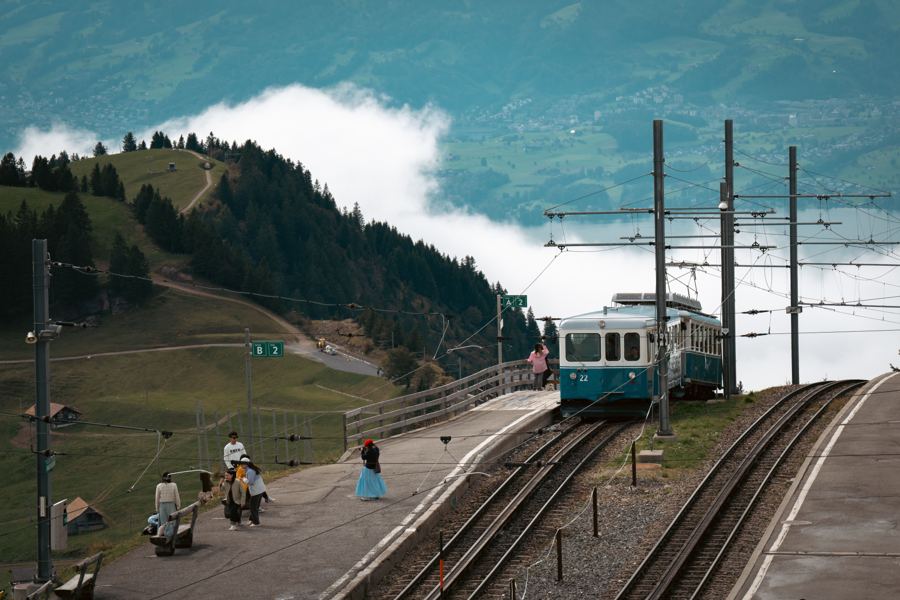
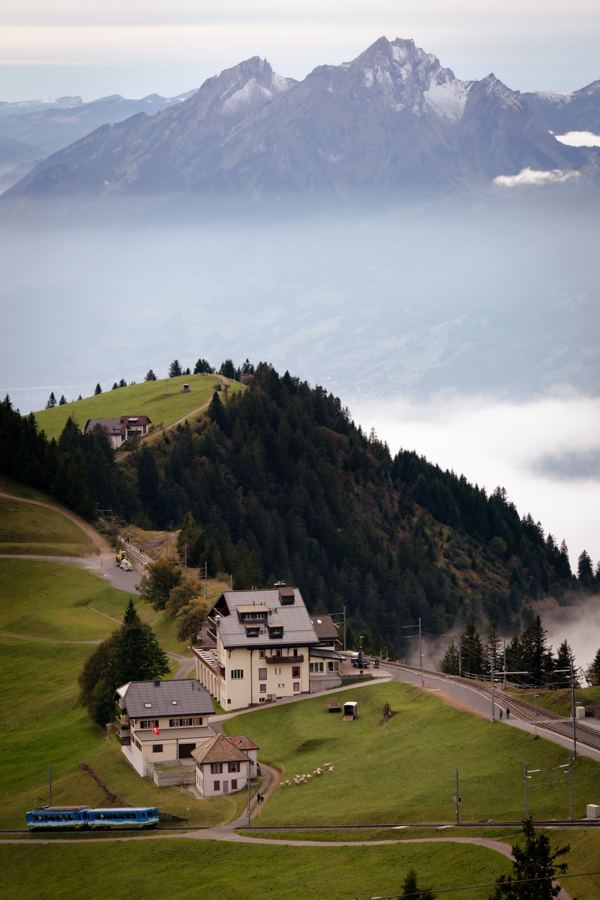
Then go up. Two classic mountains rise above the lake, and both are reached by cogwheel railway. Mount Rigi, the "Queen of the Mountains", has had a railway since 1871, the first mountain railway in Europe; take the boat across the lake to Vitznau and ride up from there. Mount Pilatus has the steepest cogwheel railway in the world, climbing gradients of up to 48 per cent. Either way, the view from the top, across lakes and a wall of snowy peaks, is one you'll never forget.
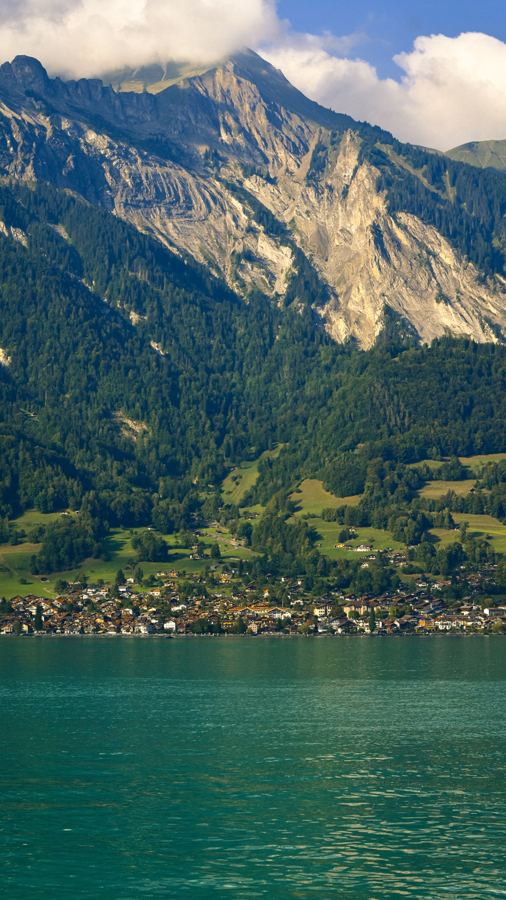
Day 4: Over the Alps to Lugano and Lake Como
Today you cross the Alps, and you have two ways to do it. The fast way takes about two hours to Lugano, through the Gotthard Base Tunnel: at 57 kilometres, the longest railway tunnel in the world, opened in 2016. The scenic way is the Gotthard Panorama Express, which runs from mid-April to mid-October: a boat across Lake Lucerne to Flüelen, then a first-class panoramic train up the old mountain line, with its looping spiral tunnels and the famous church of Wassen that you see three times from different angles. It takes about five and a half hours, and a seat reservation is required.
Lugano feels like Italy with Swiss timetables: palm-lined promenades, arcaded streets and gelato. Linger over lunch by the lake, then take the short train to Como, about thirty-five minutes away, and check in for the night. Ride the funicular up to the hill village of Brunate for sunset views over the lake, then come down for dinner in Como's old town.
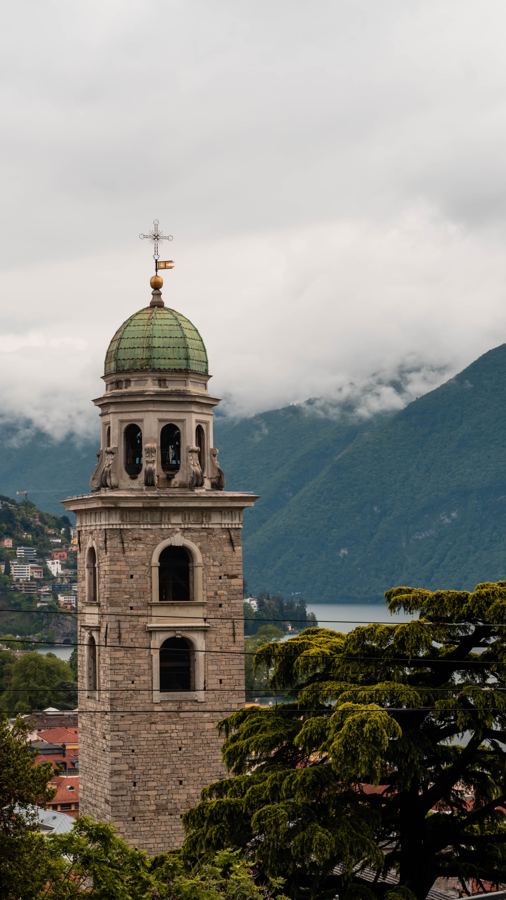
Day 5: Lake Como by boat, then Milan
Spend the morning on the water. Ferries from Como glide past villas and gardens to Bellagio, the "pearl of the lake", where cobbled lanes climb steeply from the waterfront. Faster hydrofoils run too, and boat-hopping between lakeside villages such as Varenna and Menaggio is half the fun.
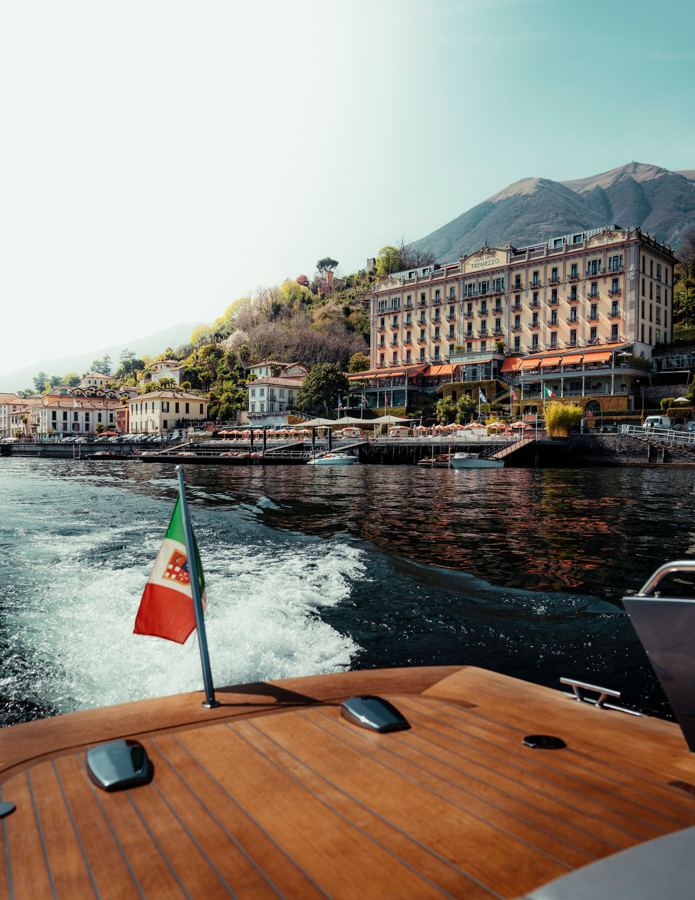
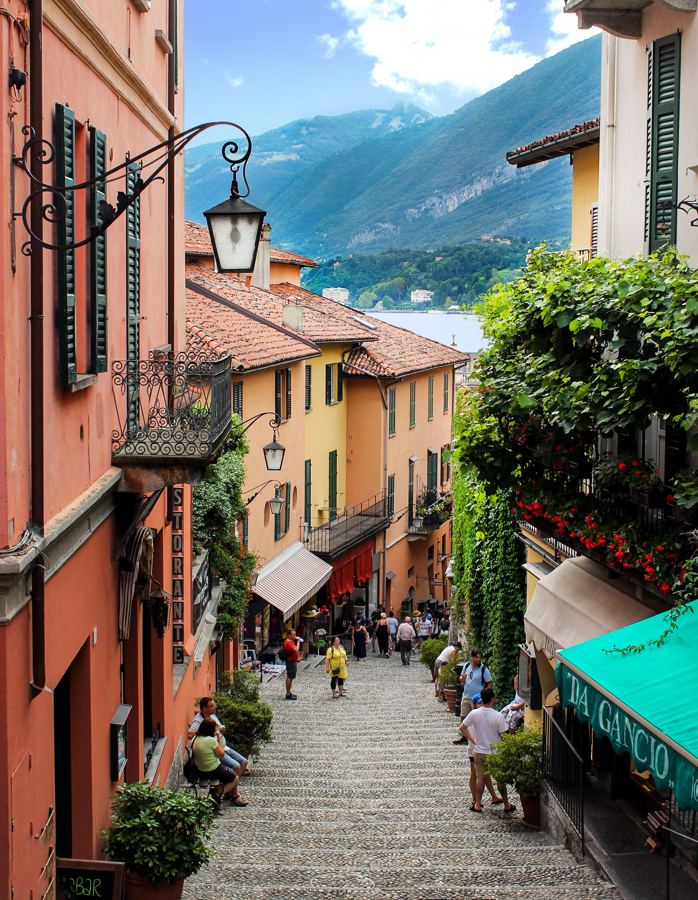
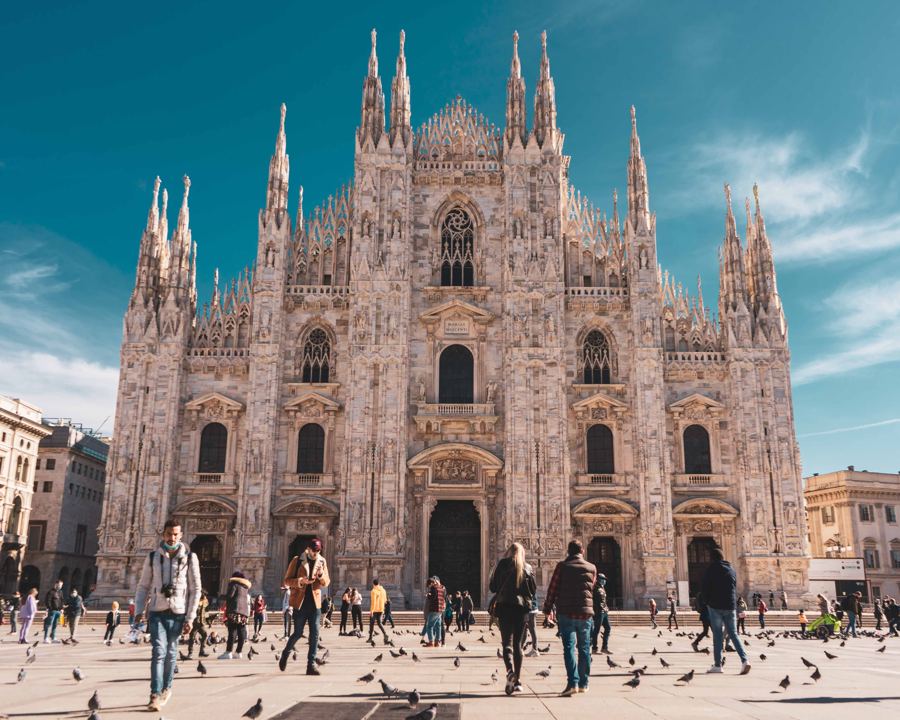
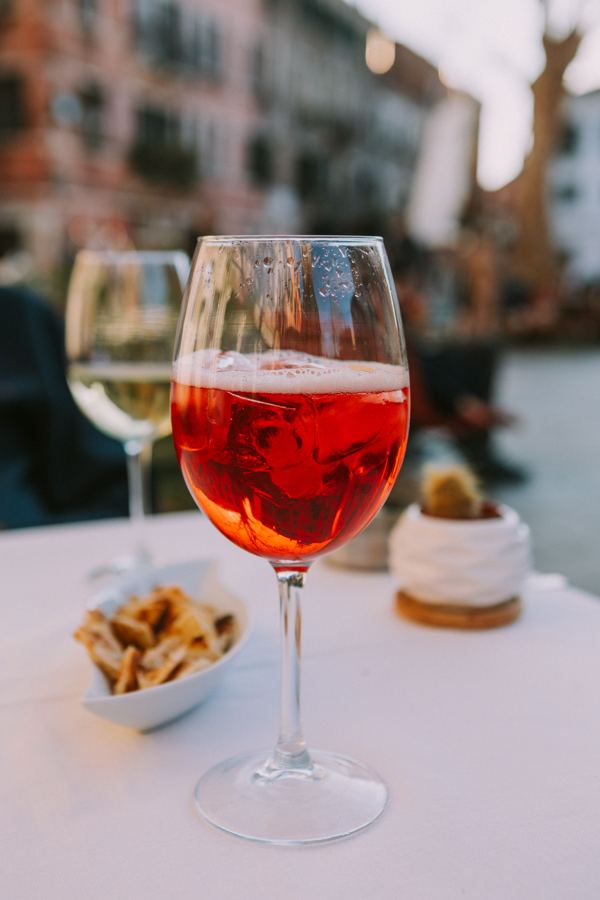
In the afternoon, take the train to Milan, under an hour away. Climb to the rooftop terraces of the Duomo, a forest of marble spires and statues, then walk through the glass-domed Galleria Vittorio Emanuele II. If you want to see Leonardo's Last Supper, book tickets the moment they're released, as they sell out fast. End the trip the Milanese way, with an aperitivo: a spritz or a Negroni with snacks, in the canal-side bars of the Navigli as the sun goes down.
Getting home
Direct high-speed trains run from Milan to Paris, taking around six to seven hours, so you can ride home through the French Alps and connect with the Eurostar, or break the journey with a night in Paris. Alternatively, fly home from Milan; the airports are easy to reach by train.
Make it your own
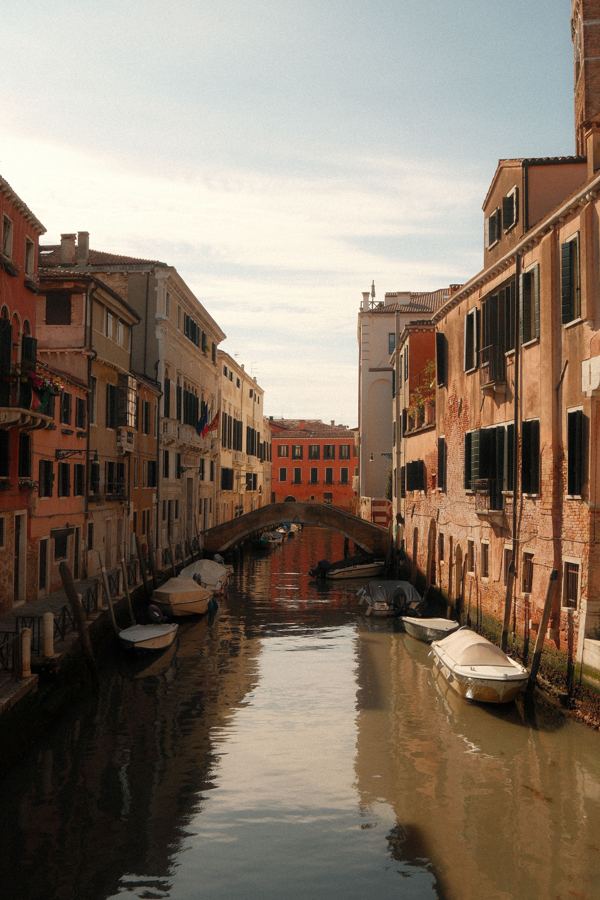
Got more time? Swap the Gotthard for the Bernina Express from Chur to Tirano, a UNESCO-listed line that loops over a curving stone viaduct and passes glaciers on its way down to Italy. Add a night in Zermatt beneath the Matterhorn, or ride the famously slow Glacier Express from Zermatt to St. Moritz. From Milan, Venice is under two and a half hours away by high-speed train. However you shape it, the Alps are best seen through a train window.
And don't forget to log every leg in My trains; this one's a trip you'll want to remember.