 TravelHub
Destination guide · Japan
Japan: ancient rhythms, modern wonders
Temples older than most nations, food that UNESCO protects, trains that run to the second, and a calendar ruled by blossom and maple. Here is why Japan gets under your skin, and how to fall for it properly.
The first time I stepped out of a Tokyo station, I braced for chaos. Thousands of people crossed the street at once, yet nobody bumped into me. A train had arrived to the minute. A shop assistant bowed as I left, although I'd bought nothing. Within an hour I understood what returning travellers mean when they say Japan feels like another planet: not because it is strange, but because it is so carefully, quietly considered.
I'm not alone in falling for it. Japan welcomed a record 42.7 million international visitors in 2025, according to the Japan National Tourism Organization, more than ten million above its pre-pandemic peak. With 27 UNESCO World Heritage sites, a cuisine on UNESCO's list of intangible heritage and four sharply defined seasons, it rewards first-timers and twentieth-timers alike. Here's what makes it special.
A country that lives by its seasons
Few places celebrate the turning year like Japan. In spring, the whole country follows the sakura zensen, the "cherry blossom front", as it sweeps north: from Okinawa in January to Tokyo and Kyoto in late March or early April, and Hokkaido in May. Friends, families and office teams spread blue tarpaulins under the trees for hanami, blossom viewing, with picnics that run well past dark beneath paper lanterns.
Autumn is spring's fiery twin. Kōyō, the changing of the leaves, paints temple gardens and mountain valleys in scarlet and gold, peaking around mid-November to early December in Kyoto and Tokyo. Summer brings fireworks and street festivals; winter brings powder snow in Hokkaido and steaming hot springs everywhere. There is no wrong time to go, just different Japans.
In Japan, beauty is often found in what doesn't last: a blossom, a single leaf, the steam rising from a bowl of tea.
Fifteen centuries of history, still in use
Japan's story is unusually easy to walk through. Nara became the first permanent capital in 710, and its great temples still stand. In 794 the court moved to Heian-kyō, today's Kyoto, which remained the imperial capital for more than a thousand years. That is why the city still holds some 1,600 temples, hundreds of shrines and narrow lanes where you might glimpse a geiko on her way to an evening appointment.
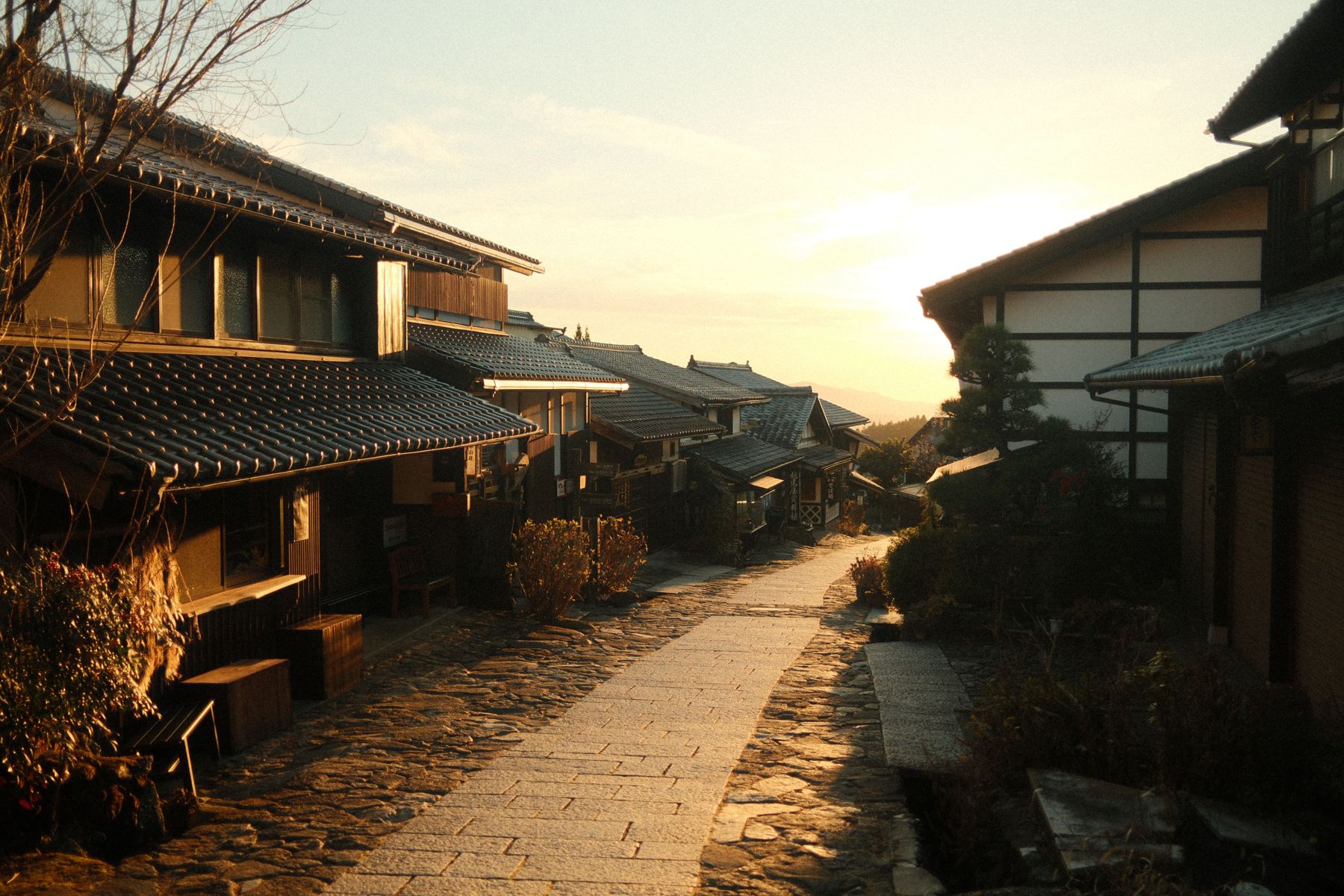
Then came the samurai era, with its castles and warlords, followed by the long peace of the Edo period (1603–1868), when the Tokugawa shoguns ruled from Edo, now Tokyo, and the country largely closed itself to the outside world for more than two centuries. Travellers moved along great highways such as the Nakasendo, resting in wooden post towns like the one at the top of this page. A handful survive almost untouched; walking the old stone path between two of them, Magome and Tsumago, is one of Japan's loveliest half-day hikes.
In 1868 the Meiji Restoration flung the doors open, and Japan modernised at a speed that still astonishes historians. That double life, ancient and hyper-modern side by side, is the country's signature.
Shrines, temples and the art of reverence
Japan's spiritual life rests on two traditions that have blended for some 1,500 years. Shinto, the native faith, honours kami, spirits found in mountains, waterfalls, ancient trees and ancestors; its shrines are marked by torii gates. Buddhism arrived from the Asian mainland in the sixth century and gave Japan its temples, pagodas and Zen gardens. Most Japanese people move comfortably between both: a visit to a shrine at New Year, a Buddhist ceremony to remember loved ones. Between them, the country has well over 150,000 shrines and temples.
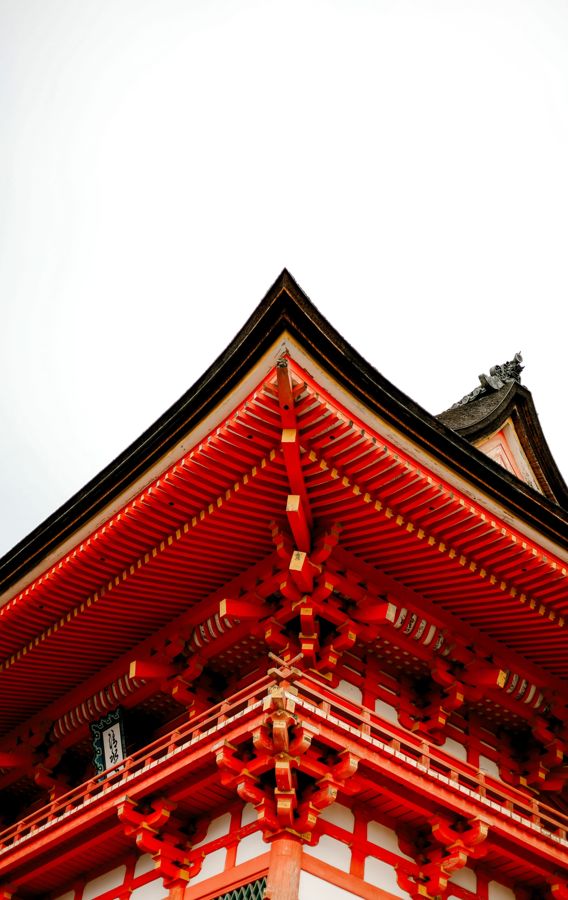
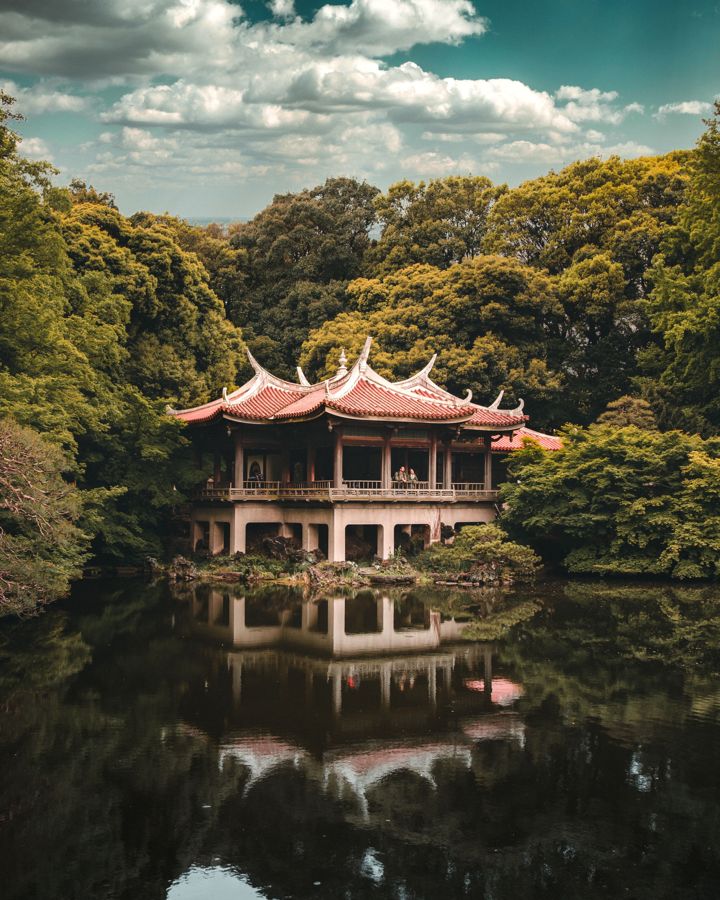
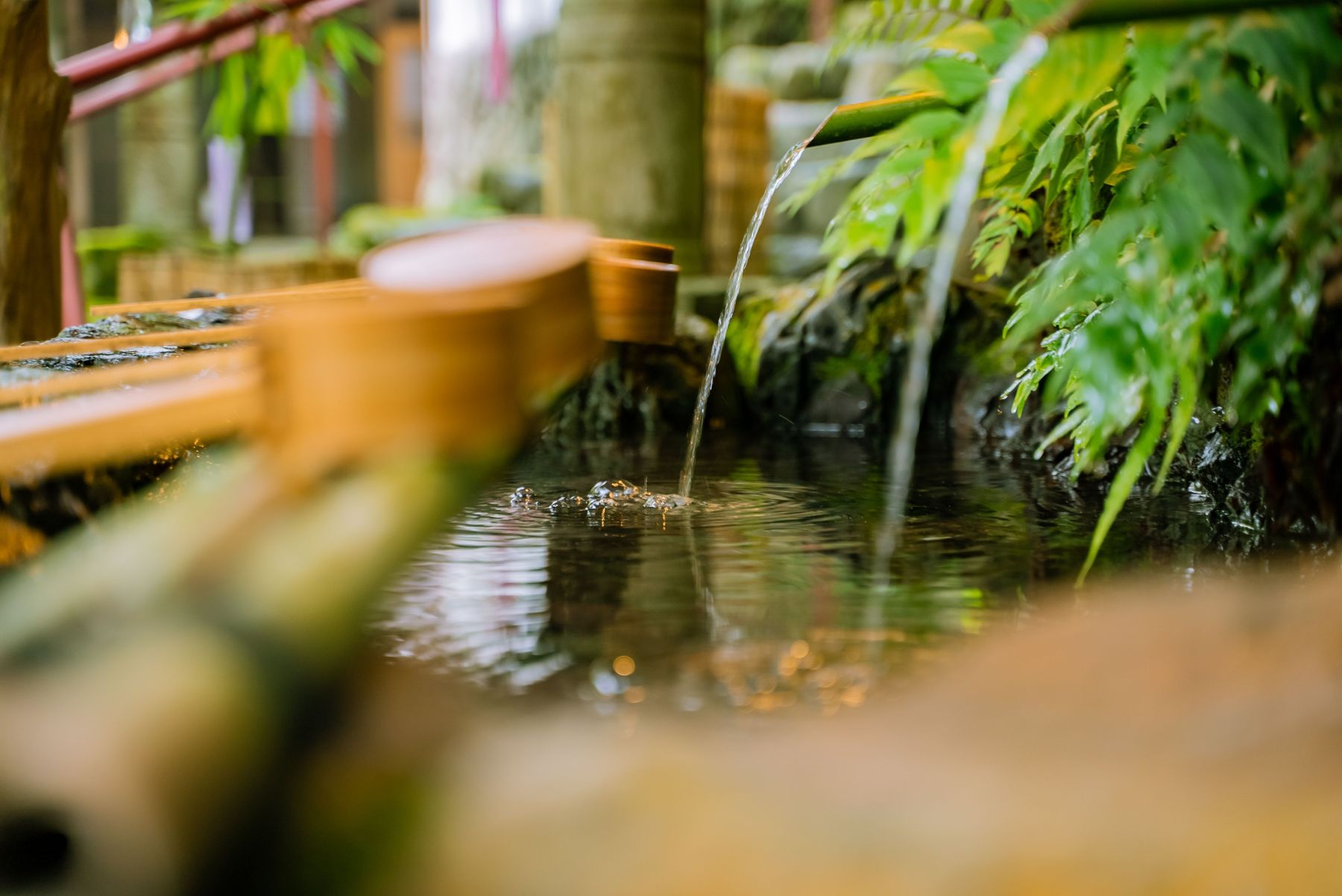
Visiting is easy if you know the rituals. At the entrance you'll find a stone water basin with bamboo ladles: rinse your left hand, then your right, pour a little water into your cupped hand to rinse your mouth, and never drink straight from the ladle. At a shrine, toss a coin into the offering box, bow twice, clap twice, make your wish and bow once more. At a temple, skip the clapping and simply bow. Nobody expects visitors to be perfect, but the effort is always noticed.
Omotenashi, onsen and everyday grace
The Japanese word omotenashi is usually translated as "hospitality", but it means something deeper: anticipating what a guest needs before they ask. You'll feel it when a taxi door opens by itself, when your luggage is sent ahead to your next hotel for a few thousand yen, and when a stranger walks you five minutes out of their way to show you the right exit. Tipping isn't part of the culture; good service is simply the standard.
To experience it at its finest, book at least one night in a ryokan, a traditional inn. You'll sleep on futons laid over tatami mats, wander in a cotton yukata robe and eat a multi-course dinner served in your room. Many ryokan sit on natural hot springs, or onsen, of which Japan has thousands. The etiquette is simple: wash thoroughly at the shower stools before you get in, bathe without a swimsuit, keep your small towel out of the water, and check the rules on tattoos, which some baths still restrict. Then sink in, and let the day dissolve.
The world's most rewarding table
If you travel for food, Japan may ruin you for everywhere else. Washoku, traditional Japanese cuisine, was added to UNESCO's list of intangible cultural heritage in 2013, recognised as much for its respect for nature and the seasons as for its flavours. It was a Japanese chemist, Kikunae Ikeda, who in 1908 identified umami, the savoury "fifth taste" that runs through dashi broth, miso and soy sauce.
Sushi began in Edo as street food, and the best sushi counters still feel intimate: eight or ten seats, a chef shaping each piece and setting it straight onto your plate, to be eaten within seconds. But don't stop there. Slurp rich ramen at a counter (slurping is polite), try crisp tempura, smoky yakitori skewers in a lantern-lit izakaya pub, Osaka's okonomiyaki savoury pancakes and Hiroshima's noodle-layered version, and, if the budget allows, one kaiseki dinner, a seasonal multi-course meal that is part banquet, part art exhibition.
Some of the joy is surprisingly cheap. Department-store food halls, called depachika, are temples of beautifully wrapped treats, and the humble konbini (convenience store) sells onigiri rice balls, fresh sandwiches and hot snacks that put most service stations to shame. Never eat while walking down the street, though; it's considered a little rude, so step aside and finish first.
Tomorrow's world, today
For all its tradition, Japan can feel like the future. The Shinkansen bullet train opened between Tokyo and Osaka in 1964, just before the Tokyo Olympics, and today's trains reach up to 320 km/h on some lines. Their average delay is famously measured in seconds, and cleaning crews turn a whole train around in minutes. There is no better way to see the country: Tokyo to Kyoto takes little more than two hours, and on a clear day Mount Fuji slides past the window.
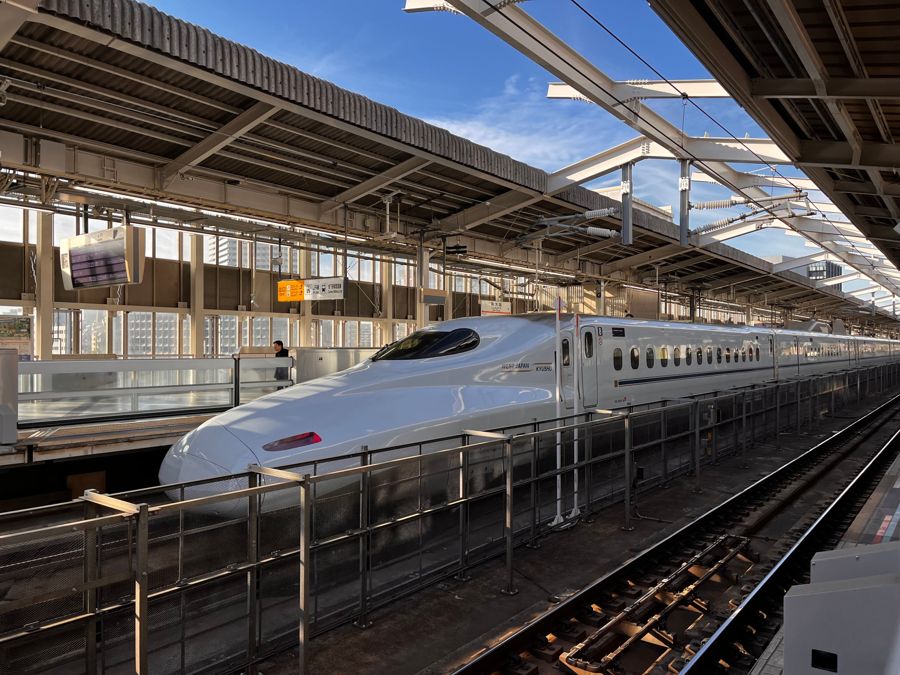
Tokyo itself is less a city than a collection of cities: neon-soaked Shinjuku, fashion-forward Harajuku, old-world Asakusa with its temple stalls, and quiet residential lanes where cats doze on doorsteps. It is one of the world's largest metropolitan areas, yet also one of the safest; lost wallets have a habit of finding their way back to their owners.
Beyond the classic route: Okinawa
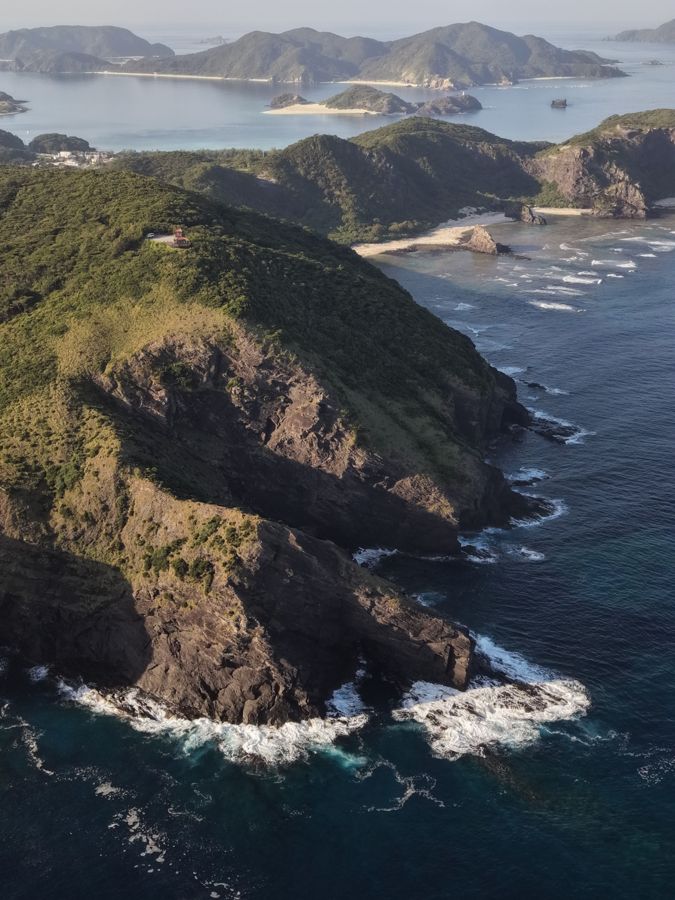
Most first trips follow the "golden route" of Tokyo, Hakone, Kyoto and Osaka, and rightly so. But save a little curiosity for the edges. Around 1,500 km south-west of Tokyo, the subtropical islands of Okinawa were once the independent Ryukyu Kingdom, with their own language, music and cuisine. Today they offer coral reefs, turquoise bays, dramatic green headlands and a famously relaxed pace of life. Okinawa is also known for the longevity of its people, often credited to diet, community and a sense of purpose the locals call ikigai.
Why Japan stays with you
People come to Japan for the photographs: the blossom, the temples, the neon. They come back for the feelings that photographs can't hold. The hush of a moss garden at dawn. The warmth of a stranger's bow. The first sip of miso soup after a long day of walking. Japan asks you to slow down and pay attention, and rewards you, again and again, for doing so.
So start planning. Your first trip will almost certainly not be your last.