 TravelHub
Destination guide · The Azores
The Azores: Europe's Hawaii, only greener
Nine volcanic islands in the middle of the Atlantic, where crater lakes glow turquoise, whales cruise past the harbour and dinner is slow-cooked in the warm earth. Here is why the Azores is Europe's most exciting island escape.
The plane drops through a ceiling of cloud and suddenly the window fills with green: not one green, but dozens. Emerald pastures stitched together by dark stone walls, forests the colour of moss, hedges of blue hydrangea running along every road. Beyond them, the Atlantic stretches in every direction to the horizon. Before you've even landed, you understand why people call the Azores Europe's answer to Hawaii.
The comparison is a good place to start. Like Hawaii, the Azores are volcanic islands far out in the ocean, roughly 1,400 km west of Lisbon, born where three of the Earth's tectonic plates meet. Like Hawaii, they have hot springs, crater lakes, whales and an almost absurdly fertile landscape. But this is Hawaii with a Portuguese accent and a cooler climate: think 25°C summer days rather than 30°C, black-sand coves rather than endless white beaches, and stone villages with whitewashed churches instead of surf towns.
Word is getting out. The islands recorded around 4.5 million overnight stays in 2025, according to the regional statistics office SREA, their fourth record year in a row. Yet with only around 240,000 residents spread across nine islands, it still feels gloriously uncrowded, and it's the world's first archipelago to be certified as a sustainable destination by EarthCheck. Go now, while it still feels like a secret.
Born of fire, painted green
Every island here was built by eruptions, and the volcanoes aren't entirely asleep. The landscape is a geology lesson you can walk through: collapsed craters filled with lakes, lava tubes you can explore with a torch, fumaroles hissing steam beside the road. The whole archipelago is a UNESCO Global Geopark.
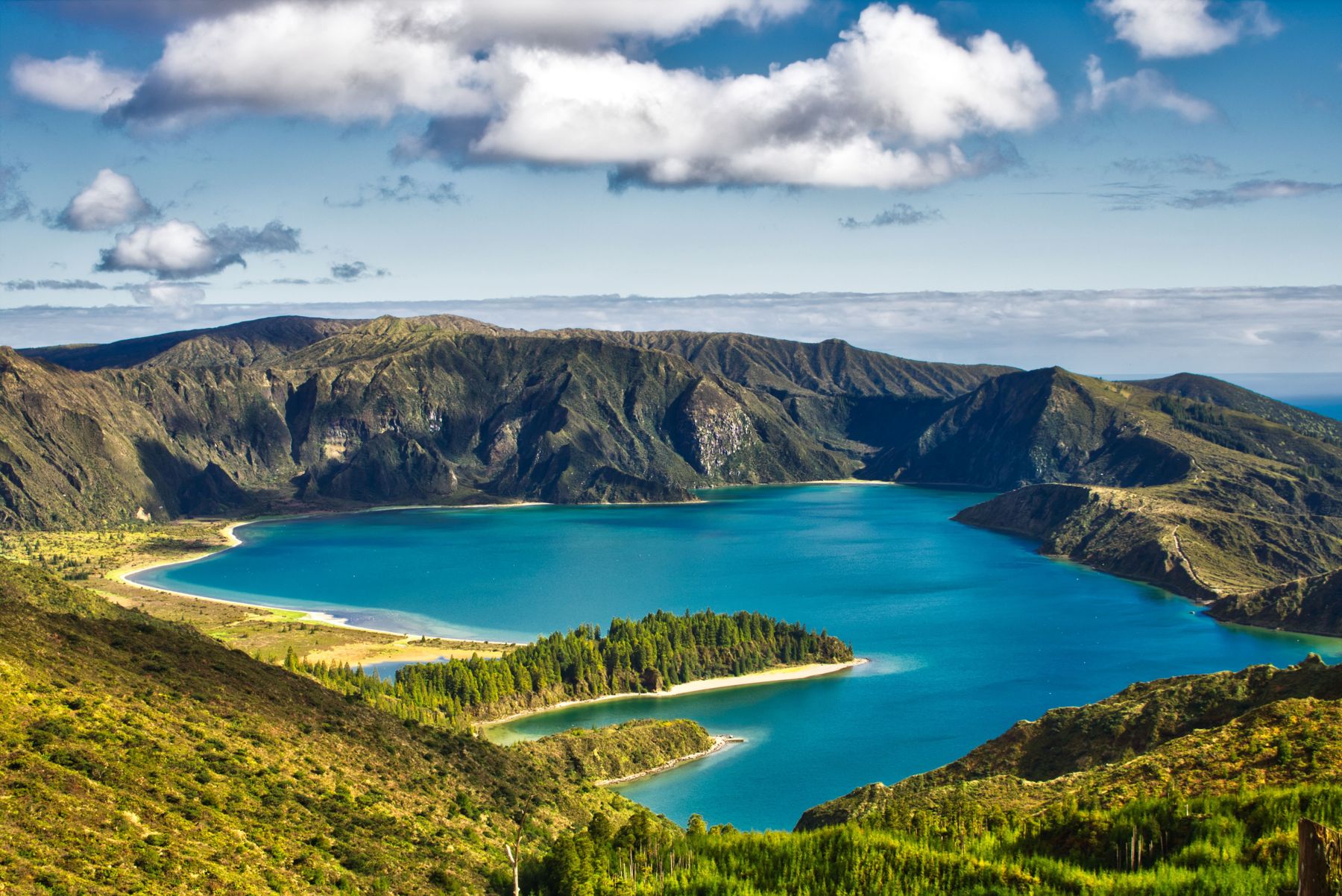
The most famous view is Sete Cidades on São Miguel, where two lakes, one blue and one green, sit side by side in a crater 5 km wide. Local legend says they were filled by the tears of a princess and a shepherd forbidden to marry; she had blue eyes, he had green. Nearby, Lagoa do Fogo, the "Lake of Fire" at the top of this page, is wilder still: no road reaches its shore, so the only way down is on foot.
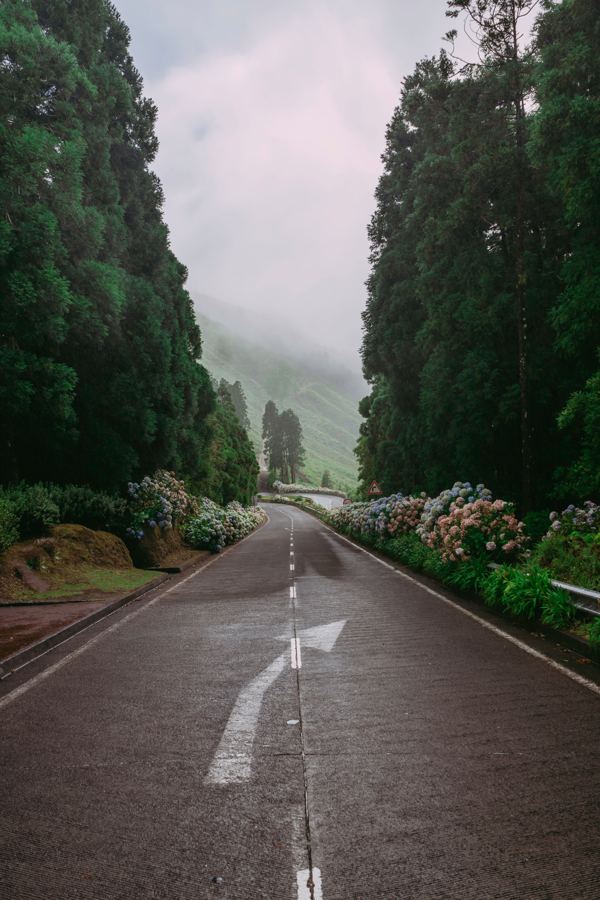
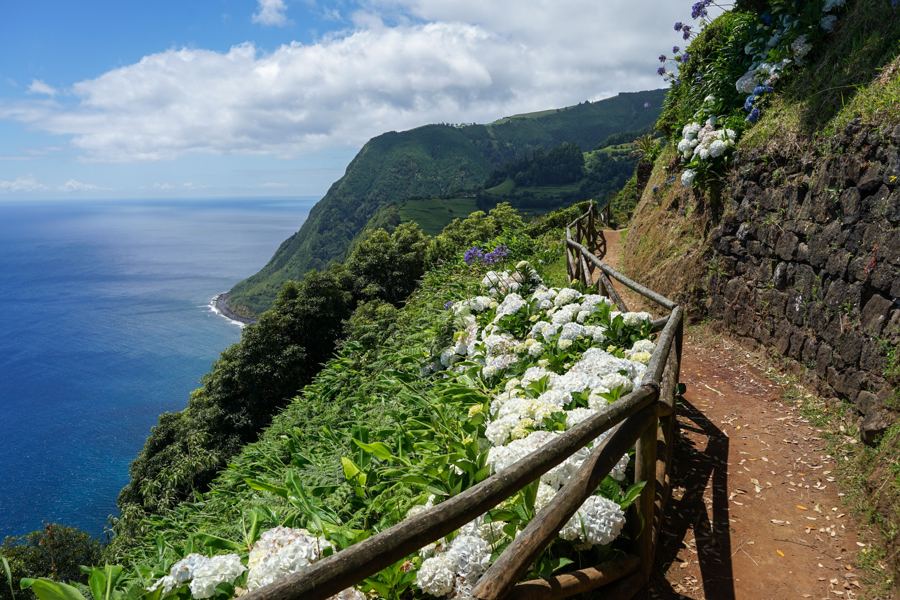
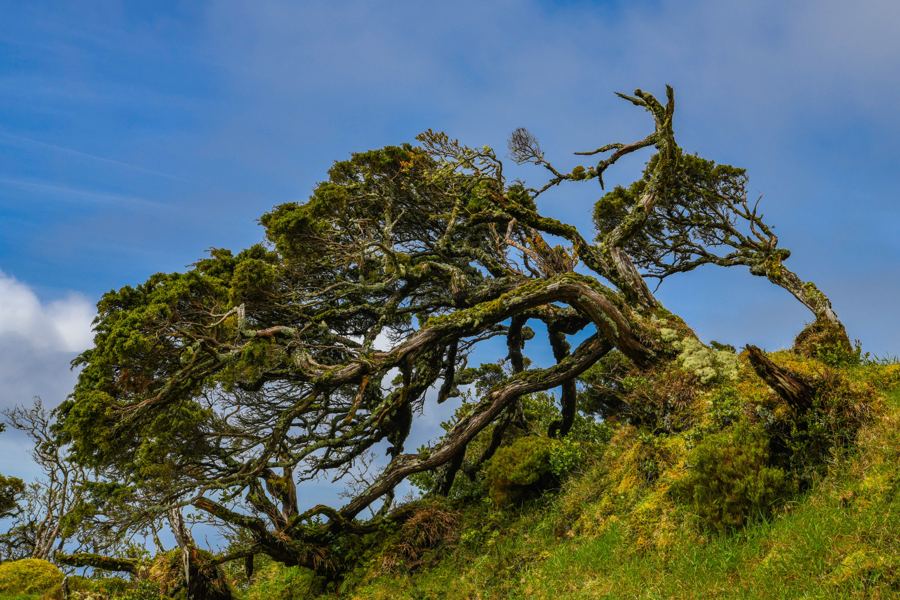
Then there's the colour. Thanks to mild temperatures and regular rain, things grow here with real enthusiasm. Hydrangeas, brought over as garden plants, now bloom wild along thousands of kilometres of roadside every summer. Orange crocosmia spills over stone walls, tree ferns unfurl in the gardens, and Japanese cedars stand in dark, fragrant forests.
The weather in the Azores doesn't change. It simply takes turns.
Hot springs and a stew cooked by a volcano
If you only do one thing on São Miguel, spend a day in Furnas, a village in a crater that steams, bubbles and smells faintly of sulphur. Here, cooks lower pots of meat, sausage and vegetables into holes in the hot ground, then cover them with earth and leave them for six hours or more. The result is cozido das Furnas, a hearty stew cooked entirely by the volcano. Arrive in the late morning to watch the pots being lifted out, then eat in the village at lunchtime.
Afterwards, sink into the warm, iron-rich water of one of Furnas's thermal pools, its colour somewhere between tea and rust, surrounded by giant ferns and century-old trees. Take a dark swimsuit you don't love too much: the iron can stain. For something wilder, the hot river at Caldeira Velha runs through a fern-filled ravine, and at Ponta da Ferraria a hot spring flows straight into the sea, so you can float in a natural rock pool where warm and cold water swirl together.
Gentle giants of the Atlantic
The Azores are one of the best places on Earth to see whales and dolphins. More than 25 species have been recorded in these waters, from common and bottlenose dolphins to the mighty sperm whale, which lives here all year. In spring, from around April to June, migrating blue, fin and sei whales pass through on their way north.
There's a moving story behind it. Until 1987, Azoreans hunted sperm whales from small open boats, guided by lookouts called vigias who watched the sea from stone towers on the cliffs. Today the same towers, and often the same families, guide whale-watching boats instead. Visit the whaling museum in Lajes do Pico to understand how much the islands have changed, then head out to sea from Ponta Delgada, Horta or Lajes. Choose an operator that follows the regional watching rules and keeps a respectful distance.
Nine islands, nine personalities
The islands fall into three groups, and each has its own character and its own colour nickname. Tap an island to meet it.
The Green Island · Eastern group
São Miguel
The biggest island and home to about half of all Azoreans. Come for the crater lakes of Sete Cidades and Lagoa do Fogo, the steaming valley of Furnas and Europe's rare tea plantations. Most visitors start here.
- Sete Cidades twin lakes
- Furnas hot springs
- Gorreana tea plantation
- Whale watching from Ponta Delgada
Give it 4–5 days
The Lilac Island · Central group
Terceira
Party-loving and proud, with the most colourful festivals in the islands. Its capital, Angra do Heroísmo, is a UNESCO World Heritage city, and you can climb down inside a dormant volcano at Algar do Carvão.
- Angra do Heroísmo old town
- Algar do Carvão lava chimney
- Holy Spirit chapels
- Alcatra pot roast
Give it 2–3 days
The Grey Island · Central group
Pico
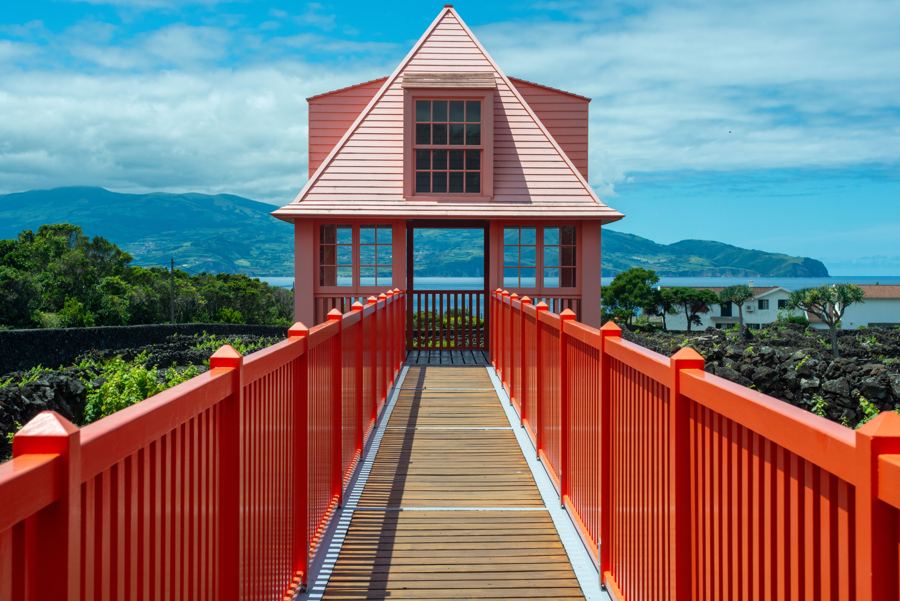
Dominated by Mount Pico, Portugal's highest peak at 2,351 metres. Its vineyards, walled in black lava stone, are a UNESCO World Heritage landscape, and the old whaling village of Lajes is now a whale-watching hub.
- Climb Mount Pico
- UNESCO lava-stone vineyards
- Whaling museum in Lajes
- Verdelho wine
Give it 2–3 days
The Blue Island · Central group
Faial
Hydrangea hedges, a sailors' marina in Horta where yacht crews paint their names on the harbour wall, and the moon-like landscape left by the Capelinhos eruption of 1957–58.
- Horta marina murals
- Capelinhos volcano
- The Caldeira crater walk
- A drink at a famous sailors' bar
Give it 2 days
The Brown Island · Central group
São Jorge
A long, steep ridge rising straight out of the sea. Lush coastal plains called fajãs sit at the foot of its cliffs, reachable only on foot, and its spicy cow's-milk cheese is protected by name.
- Hike down to the fajãs
- São Jorge cheese
- Clams at Caldeira do Santo Cristo
- Clifftop viewpoints
Give it 2 days
The White Island · Central group
Graciosa
Gentle, quiet and a UNESCO biosphere reserve. Walk down a stone spiral staircase into Furna do Enxofre, a vast cave beneath a volcanic crater, then reward yourself with a sweet queijada.
- Furna do Enxofre cave
- Windmills and vineyards
- Queijadas da Graciosa
- Thermal baths
Give it 1–2 days
The Pink Island · Western group
Flores
Perhaps the most beautiful of all: waterfalls pour down green cliffs into crater lakes. An islet just off its coast is the westernmost point of Europe, so the sun sets here last.
- Poço da Ribeira do Ferreiro waterfalls
- Rocha dos Bordões basalt columns
- Seven crater lakes
- Coastal hiking
Give it 2–3 days
The Black Island · Western group
Corvo
A single village of around 400 people and a huge, cloud-filled crater with tiny lakes on its floor. Many visitors come for the day by boat from Flores; birdwatchers come for the rare autumn arrivals.
- The Caldeirão crater
- Day trip by boat from Flores
- Autumn birdwatching
- Village life
Give it 1 day
The Yellow Island · Eastern group
Santa Maria
The first island to be settled, in the 1430s, and the sunniest and warmest of the nine. Expect golden-sand beaches, whitewashed villages, fossils in the rocks and a small red desert.
- Praia Formosa beach
- Barreiro da Faneca red desert
- Fossil-rich coast
- Whitewashed villages
Give it 2 days
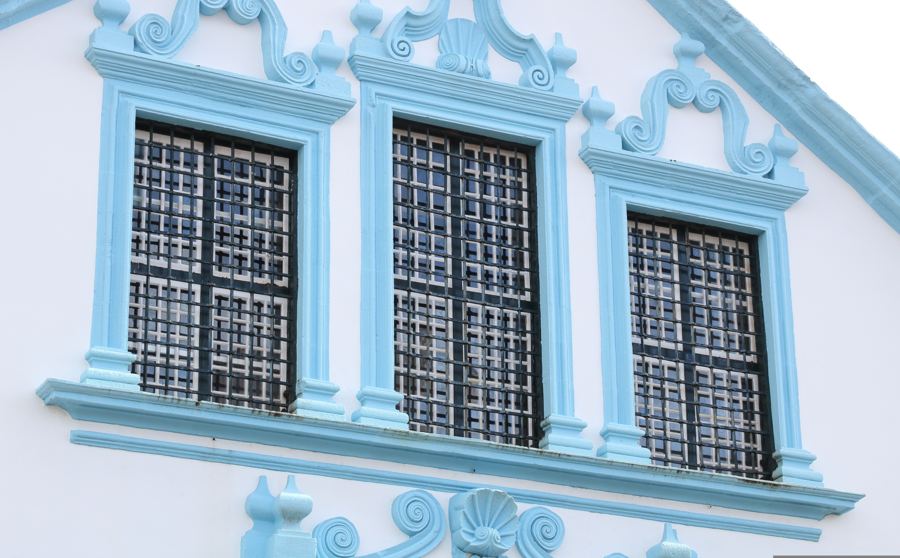
Five centuries of island life
When Portuguese sailors reached the Azores in the 1420s and 1430s, they found nobody at all. Settlers arrived from mainland Portugal and Flanders, and the islands soon became a vital stopover on the great ocean routes: ships returning from Africa, Asia and the Americas would put in at Angra do Heroísmo on Terceira to restock. Its grid of streets, grand churches and colourful houses earned it a place on the UNESCO World Heritage list in 1983.
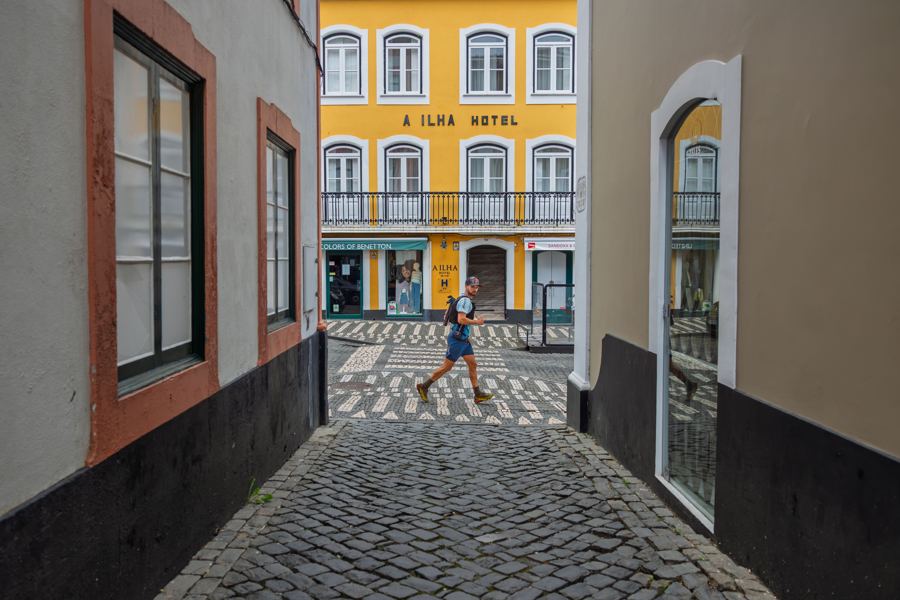
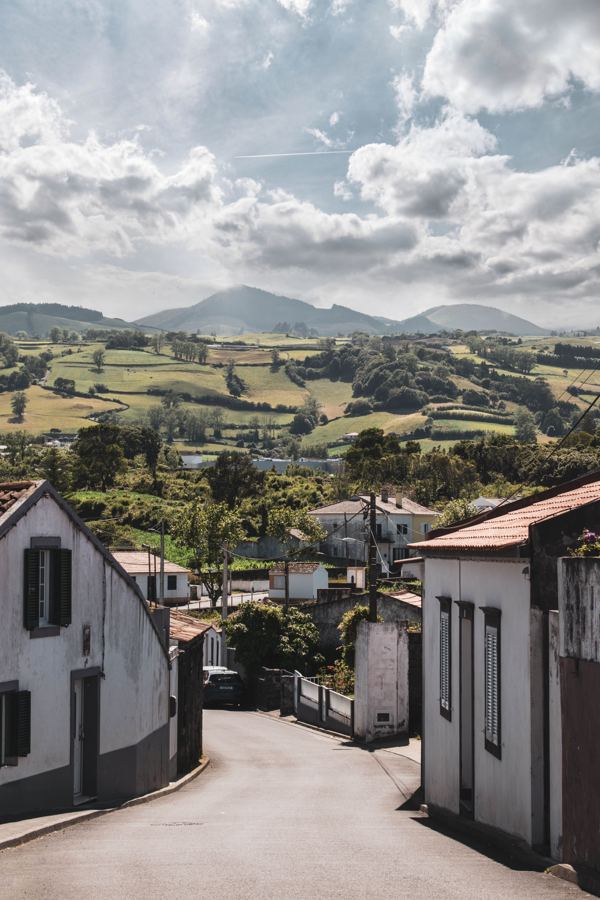
Faith shapes the calendar. From Easter to late summer, villages celebrate the Festas do Espírito Santo, the Holy Spirit festivals, crowning an "emperor", parading through the streets and sharing free bowls of soup and sweet bread with anyone who turns up, visitors included. Look out for the impérios, tiny, brightly painted chapels built for the festivals; Terceira alone has dozens.
Tea, pineapples and the happiest cows in Europe
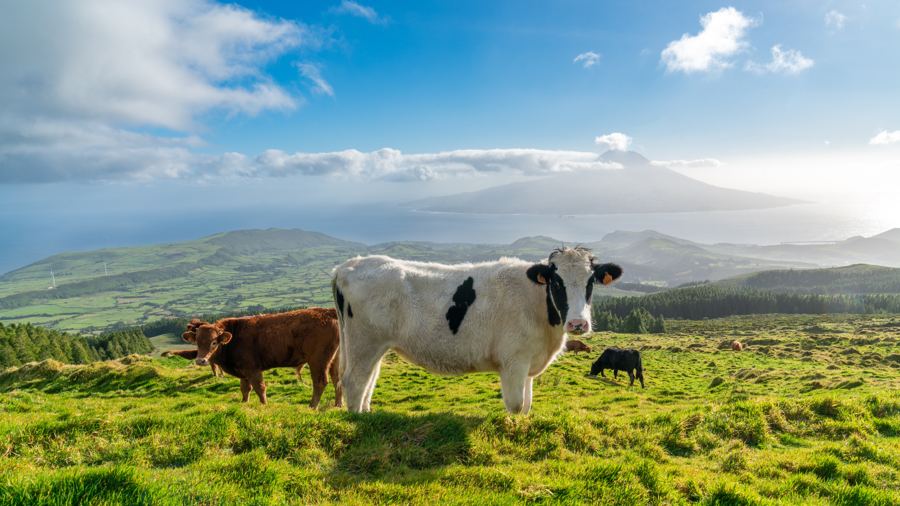
Azorean food is honest, generous and very local. Those emerald pastures feed some of the most contented cows you'll ever meet, grazing outdoors almost all year, so the butter, milk and cheese are superb. Try the sharp, peppery São Jorge cheese, and spread fresh butter on warm bolo lêvedo, a soft, slightly sweet muffin-like bread.
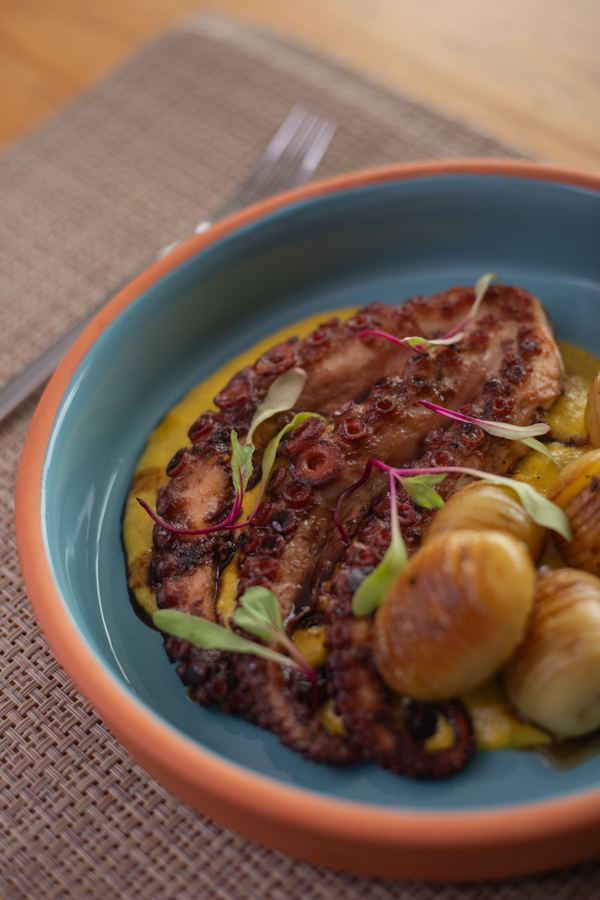
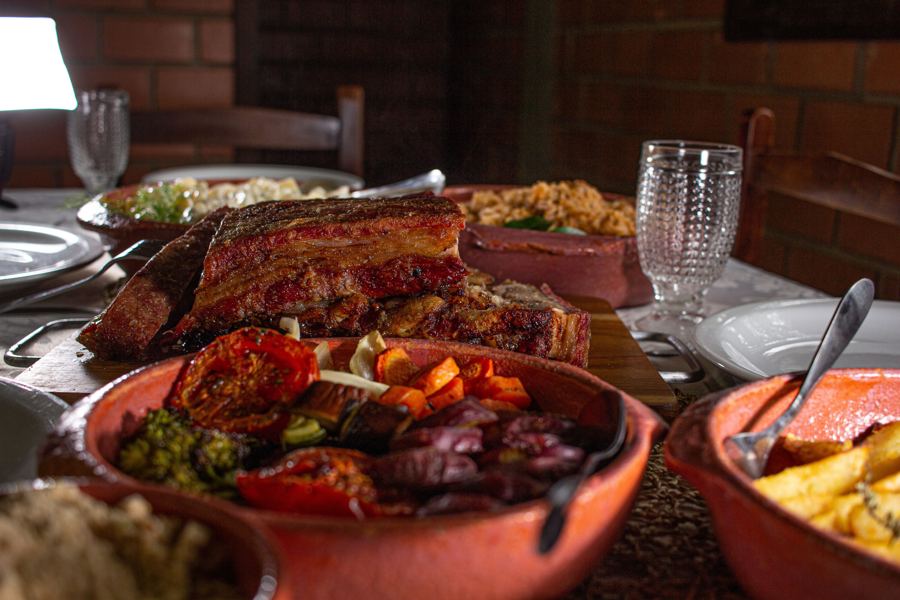
From the sea come grilled limpets (lapas) sizzling in garlic butter, octopus roasted in red wine, and wreckfish and blue jack mackerel cooked simply over coals. On Terceira, order alcatra, beef slow-baked with wine, spices and bacon in a clay pot. Then there's the sweet stuff: São Miguel grows pineapples in whitewashed glasshouses, a tradition since the 19th century, and is home to one of Europe's very few tea plantations. Gorreana has been producing green and black tea since 1883, and you can wander its hillside rows for free. Finish with a glass of mineral-rich white wine from Pico's lava-stone vineyards.
The great outdoors
The Azores are made for walking. More than 80 official, well-marked trails cross the islands, from easy lakeside strolls to the challenging climb up Mount Pico, Portugal's highest mountain, which takes most people six to eight hours there and back. Climbers must register at the mountain house at the start of the trail, and a guide is a good idea. Some of the most popular trails and lakes now charge a small fee or limit numbers, so check the official trails website before you set off.
On the water, there's canyoning down waterfalls on São Jorge and Flores, kayaking on crater lakes, surfing on São Miguel's north coast, and diving with manta and devil rays around Santa Maria in late summer. Or simply find a viewpoint, a miradouro, and watch the clouds pour over the crater rim. Many have picnic tables and barbecues, so pick up bread, cheese and local sausage on the way.
Why the Azores stay with you
Hawaii has the fame. The Azores have something rarer: the feeling of finding a place before everyone else. You'll remember the hush of a crater lake at dawn, the hiss of a whale breathing beside the boat, a stew lifted steaming from the ground and a stranger in a village café who insists you try their cheese. In a world that keeps speeding up, these islands still move to the rhythm of the tide and the weather.
So pack a raincoat and a swimsuit, and go and see them. You'll probably need both on the same day.